Additively Manufactured Ceramic Components for Industrial Applications
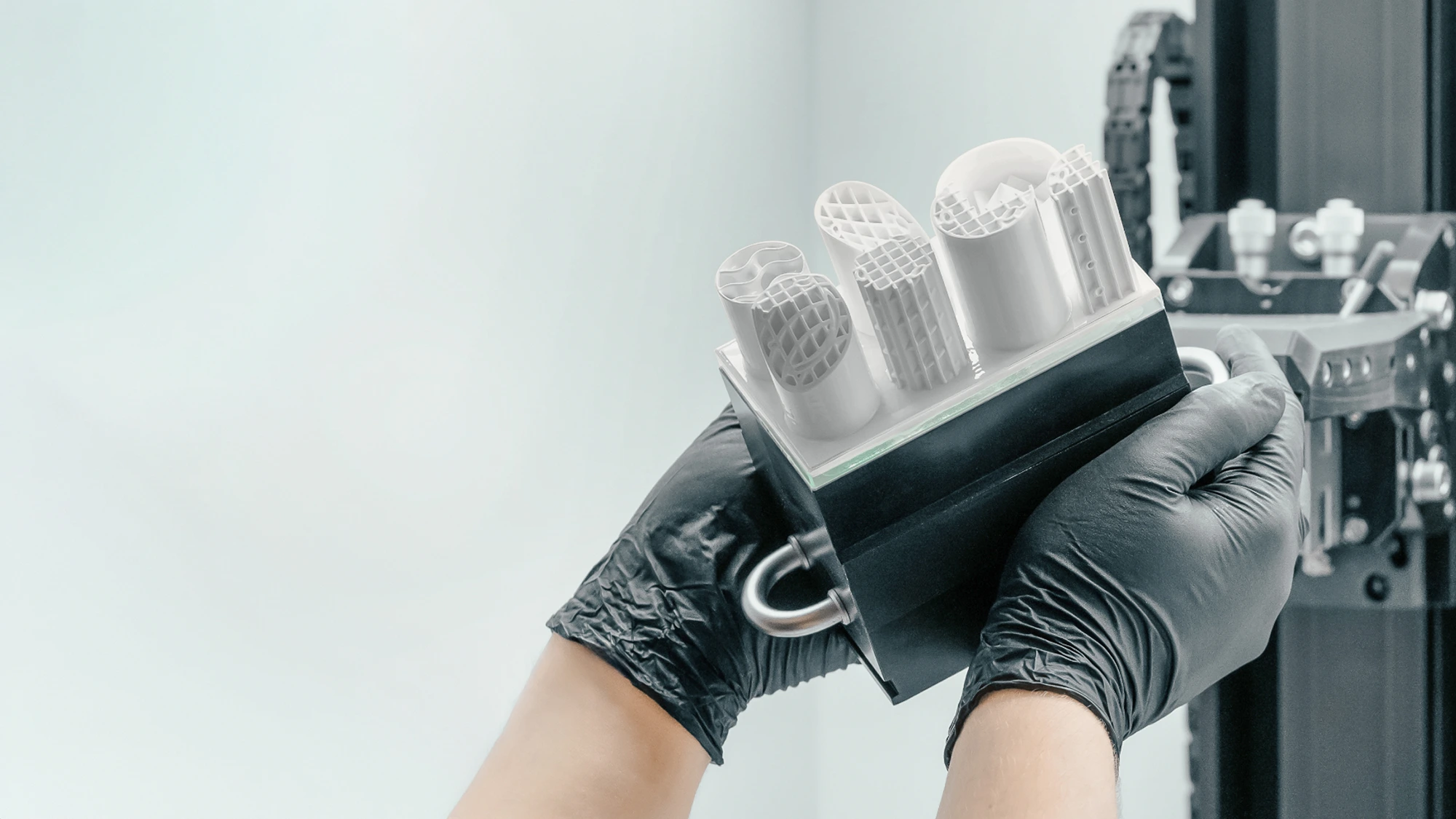
This section presents selected application examples of technical ceramic components produced using additive manufacturing.
We work with engineering teams and technical decision-makers in industries such as mechanical and plant engineering, semiconductor manufacturing, medical technology, aerospace, and energy systems, supporting projects from component development through to industrial production. Ceramic additive manufacturing is particularly suited for applications that require complex geometries, functional integration, and reliable performance under demanding thermal, chemical, mechanical, or electrical conditions. Depending on application requirements, components can be realized using established oxide ceramics or emerging non-oxide ceramics. The technology also enables efficient product development and scalable series production where conventional, tool-based manufacturing processes reach their limits.
The following examples illustrate how ceramic additive manufacturing can be used to realize innovative component designs and application-specific solutions for industrial applications.
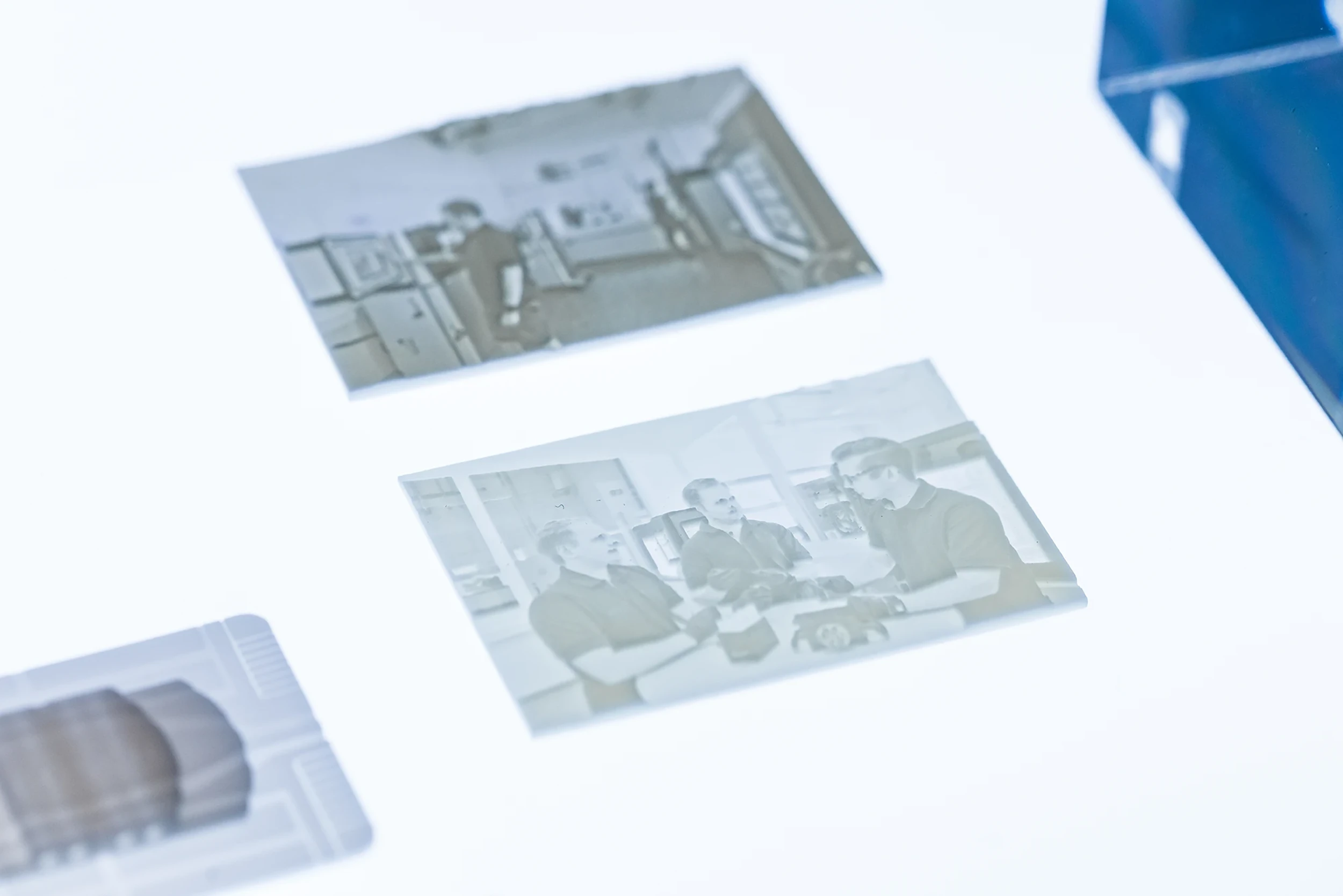
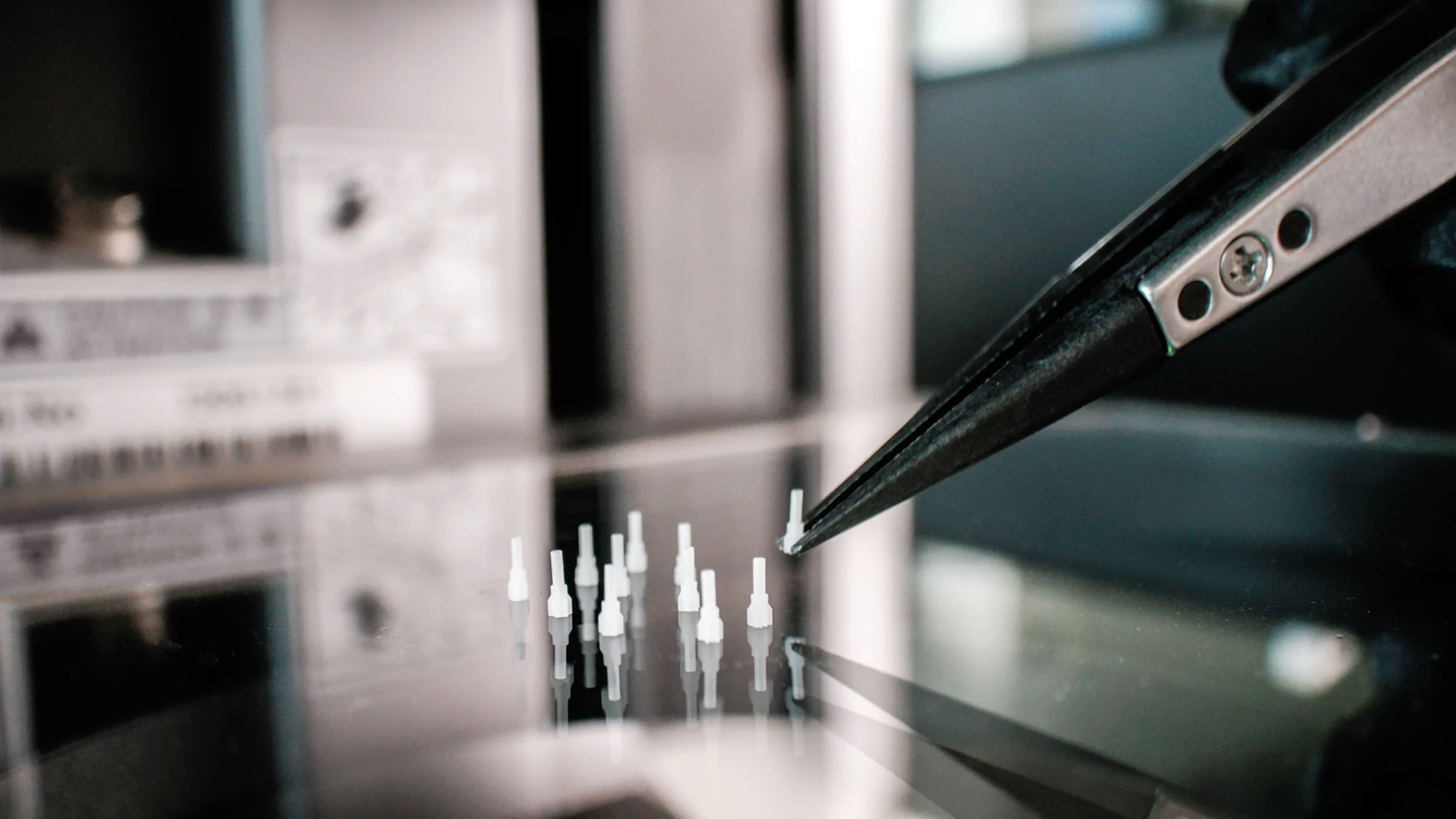
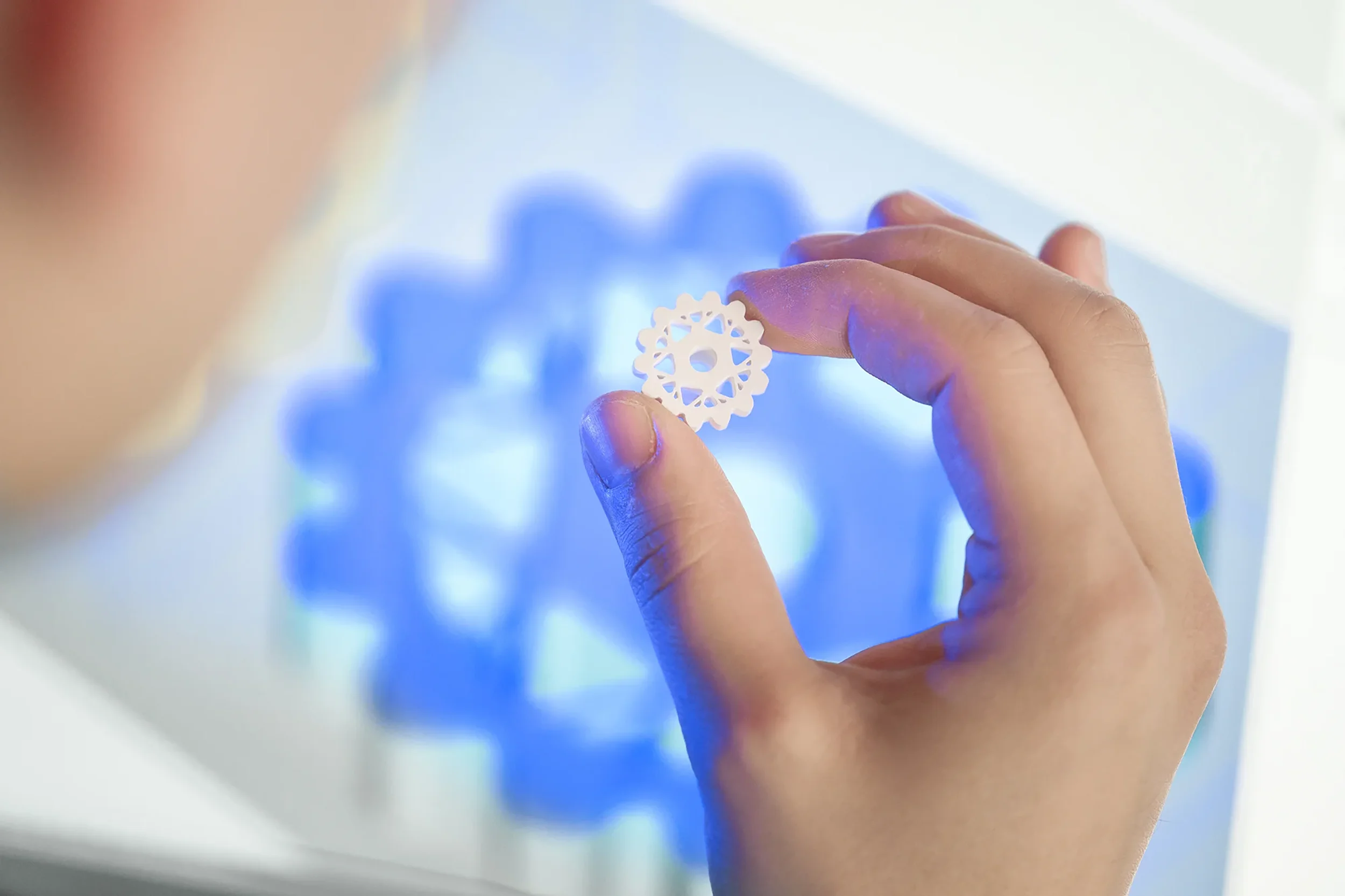
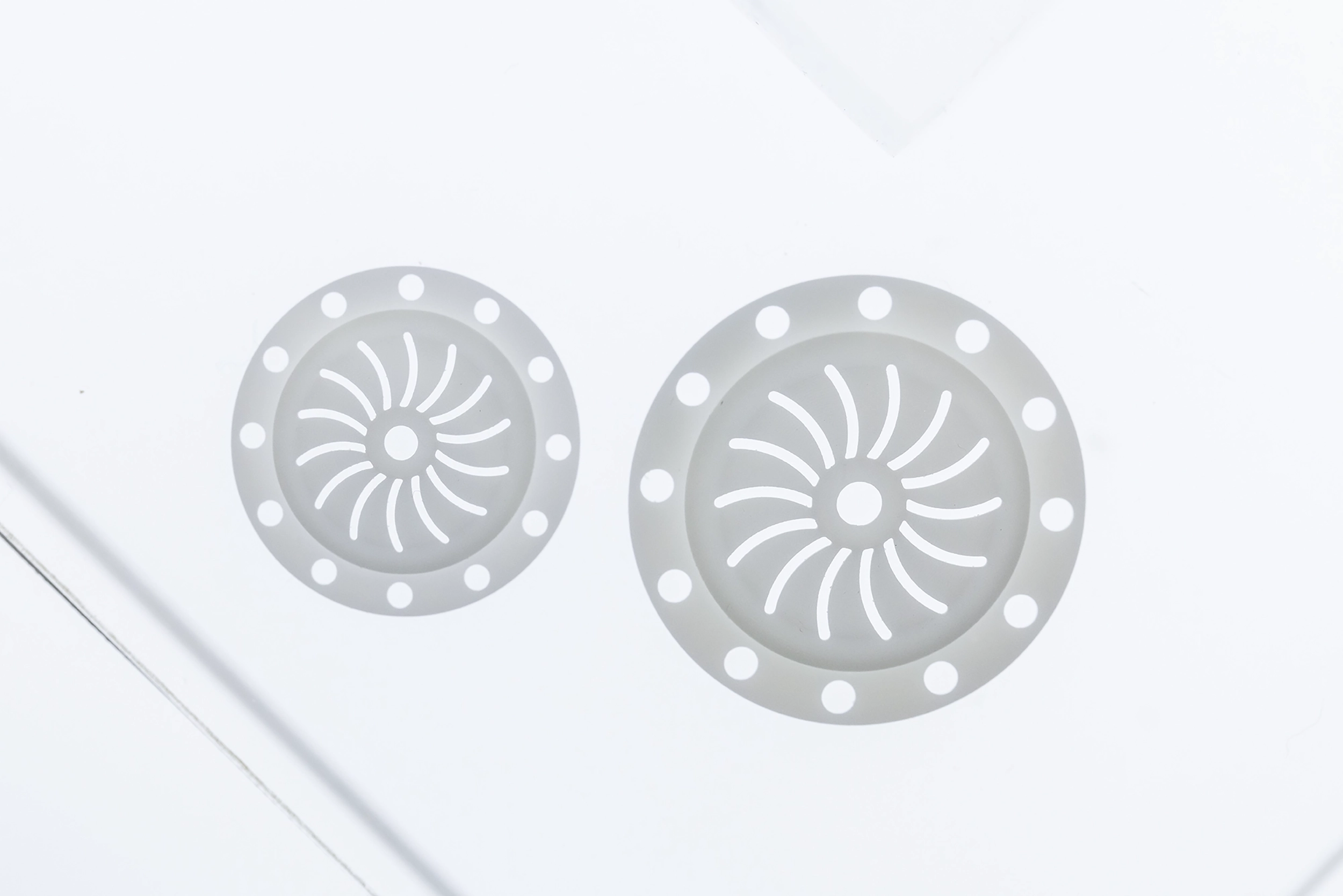
Zoom in to explore ceramic AM in detail
Additive Manufactured Ceramic Components – Application Examples
Dosing Needle
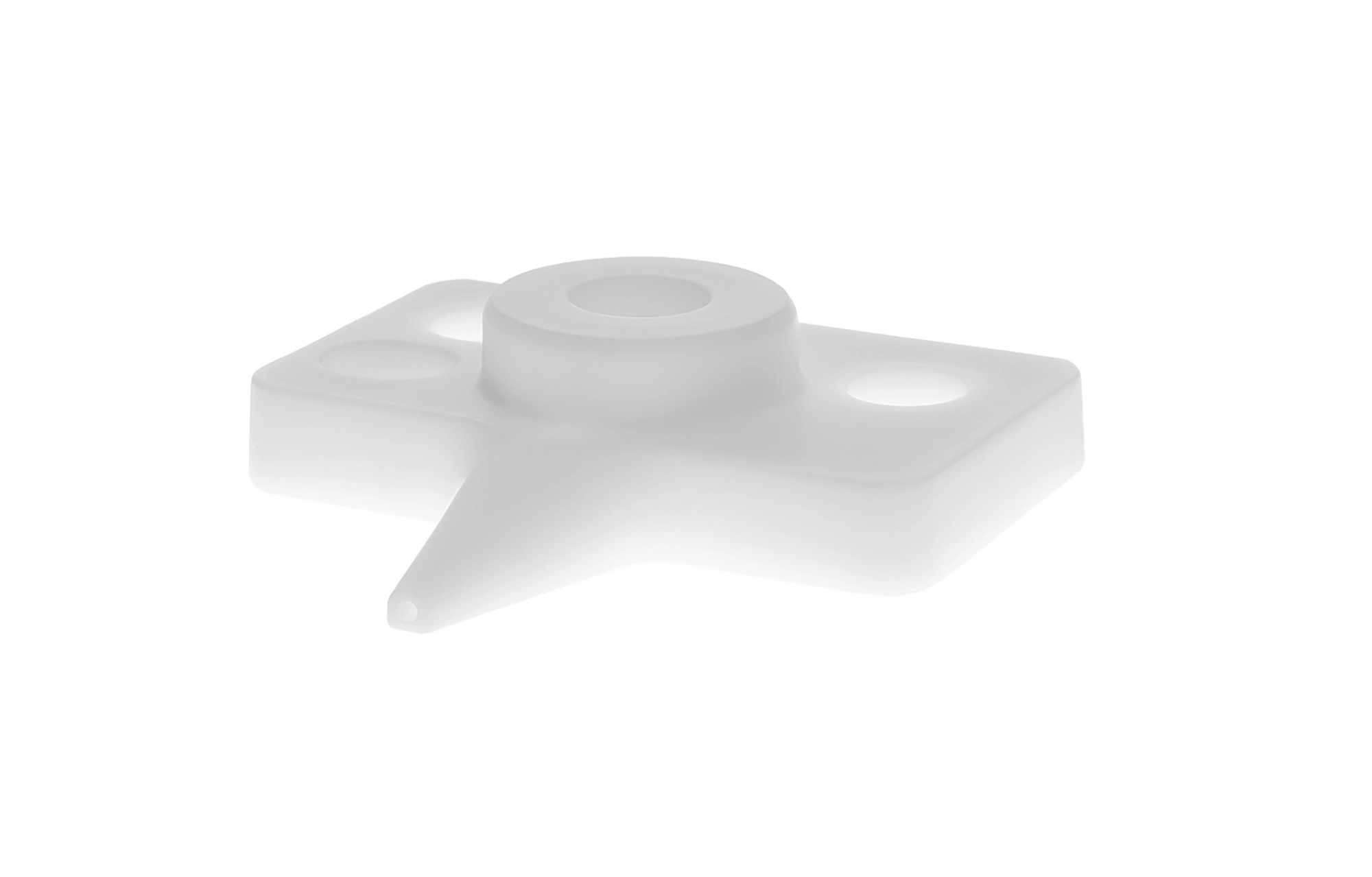
Realizing highly complex internal geometries
The dosing needle features a conical, curved internal channel geometry that tapers from several millimetres down to 0.8 mm. Such a structure cannot be produced using conventional ceramic manufacturing processes and highlights the design freedom enabled by ceramic additive manufacturing. Ceramic 3D printing enables the precise realization of these internal geometries while achieving the required low surface roughness inside the channel. This ensures low-friction fluid flow and reliable, high-precision dosing performance in automated adhesive processes.
Parameter
- Application: Dosing needle for automated adhesive processes
- Material: Alumina 99.8%
- Weight: 7.5 g
- Dimensions: 26 × 26.5 × 7.2 mm
- Technology: VPP (LCM)
- Features: Internal geometry only producible via ceramic additive manufacturing
- Advantages: Precise dosing performance; Low friction due to high surface quality inside the channel
Catalyst Structure
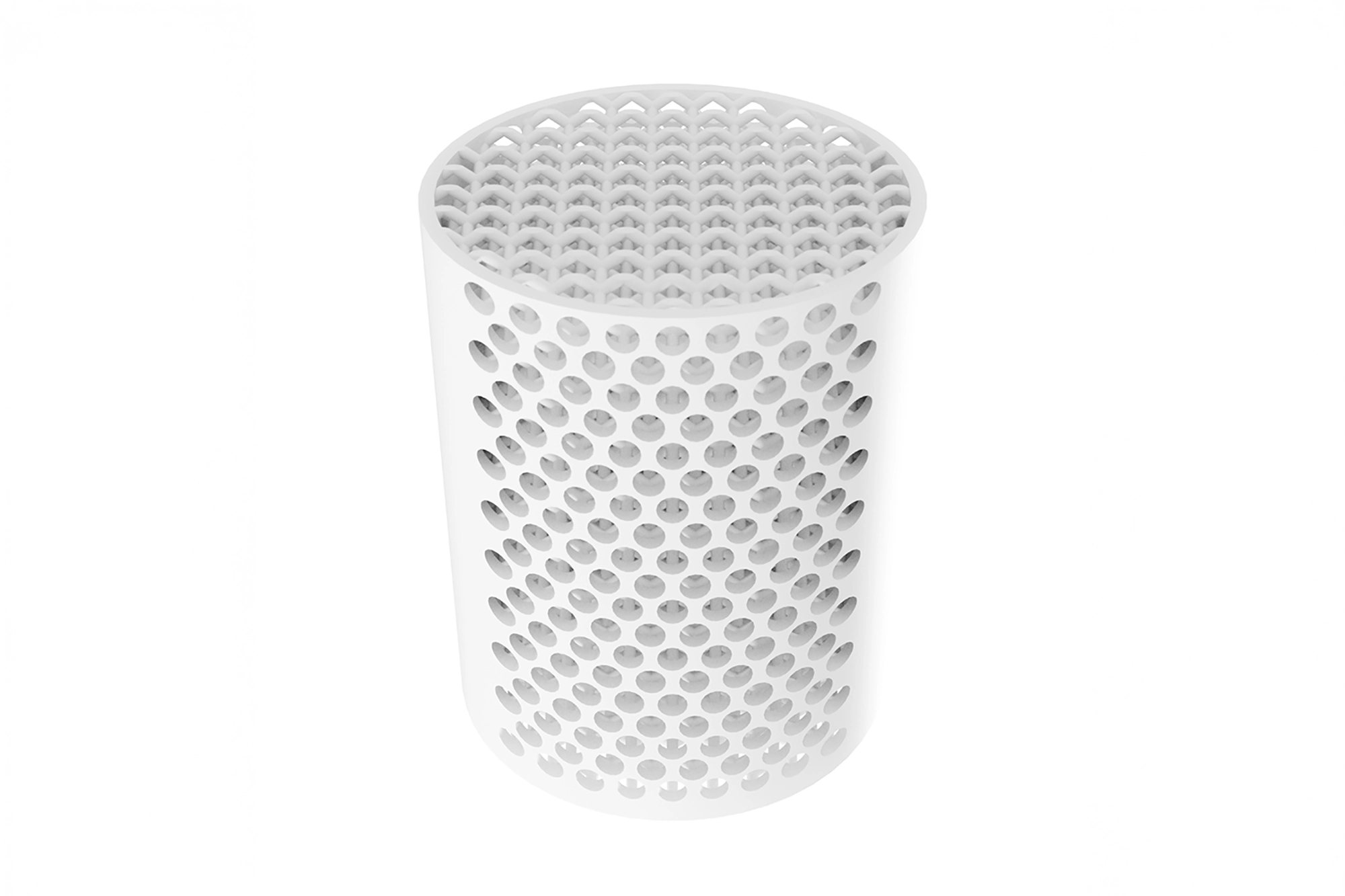
Periodic open-cell structure for efficient reactions
This ceramic catalyst demonstrates how ceramic additive manufacturing enables new design possibilities for thermal and chemical processing. The periodic open-cell structure significantly increases the available surface area while improving flow characteristics within the component. At the same time, the material withstands mechanical loads at high temperatures. This results in faster reactions, higher process efficiency and longer component lifetimes, providing both performance and economic advantages.
Parameter
- Application: Reactor catalyst for accelerating reactions of gases or liquids
- Material: Alumina 99.8%
- Weight: 313 g
- Dimensions: Diameter 80 mm, height 100 mm
- Technology: VPP (LFD)
- Features: Diamond-inspired periodic open-cell structure with 2.5 mm struts
- Advantages: Highly porous flow-through structure; Large active surface area; Optimized mixing and reaction efficiency
Textile Needles
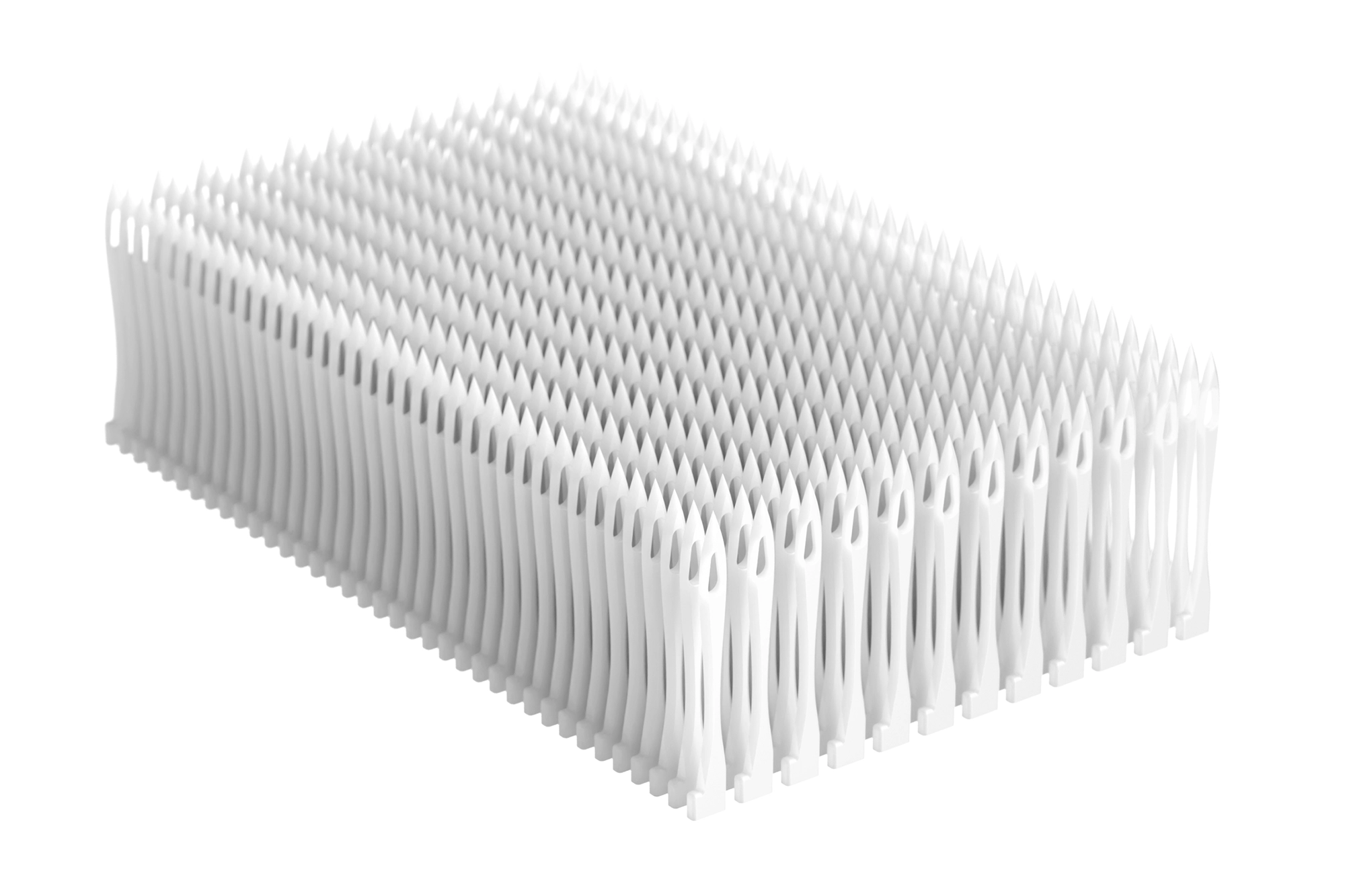
Precision and efficiency in series manufacturing
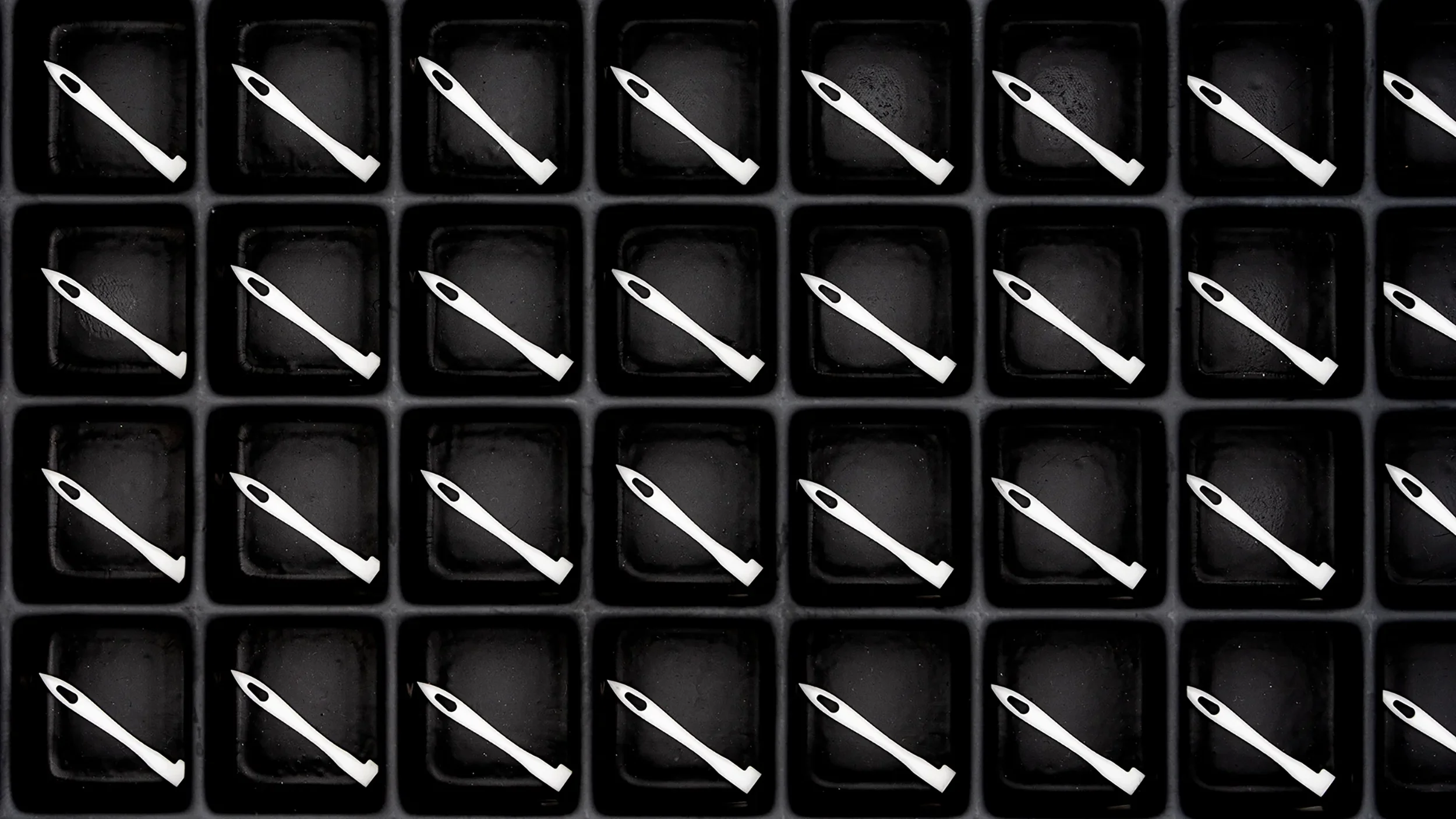
This example highlights the scalability of ceramic additive manufacturing. A single build platform contains 444 identical needles, demonstrating efficient series production. The components are used in Tailored Fiber Placement processes, where they are exposed to abrasive fibres. The ceramic material ensures high wear resistance while its low density combined with high stiffness prevents deflection during operation. This results in consistent precision across large production volumes.
Parameter
- Application: Needle for textile processing (Tailored Fiber Placement)
- Material: Alumina 99.8%
- Weight: 0.5 g per needle
- Dimensions: Length 22.3 mm, thickness 1 mm, eye width 2 mm, clamping width 3 mm, eye diameter 1 to 1.5 mm
- Technology: VPP (LCM)
- Features: High-precision manufacturing with tight tolerances (±0.05 mm)
- Advantages: Up to 444 parts per build job; High wear resistance; Low weight; No needle deflection during operation
Laser Welding Fixture
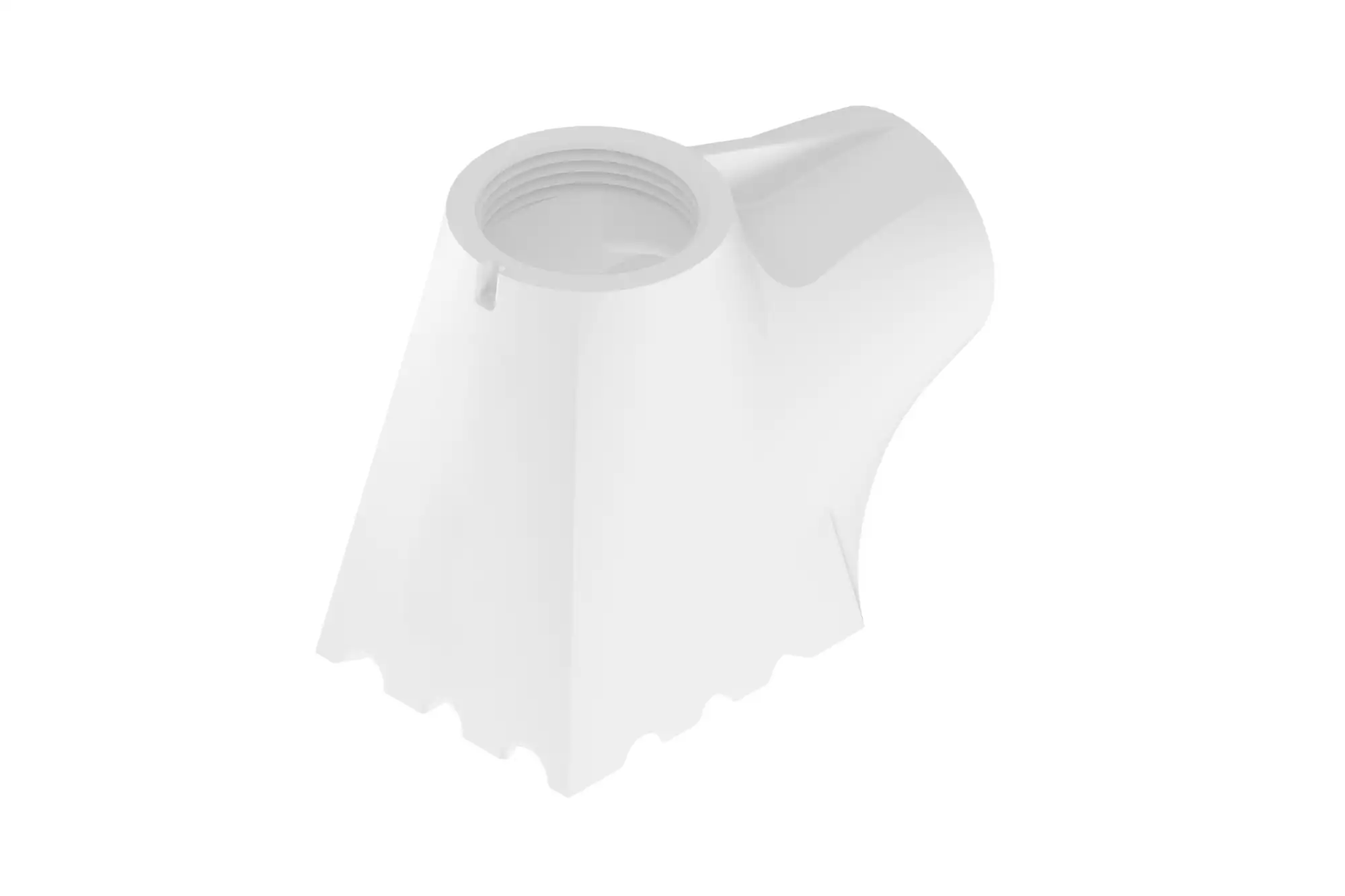
Precision and thermal stability in demanding processes
This component is used as a hold-down socket in automated laser welding processes, for example in battery manufacturing. Electrically conductive materials are not suitable in this environment. Technical ceramics provide reliable electrical insulation combined with high thermal stability. Additive manufacturing enables geometries that are precisely adapted to each weld seam. Integrated channels support the extraction of smoke, aerosols and debris directly at the weld point, contributing to a stable and clean process environment.
Parameter
- Application: Hold‑down socket for automated laser welding
- Material: Alumina 99.8%
- Weight: 23 g
- Dimensions: 12 × 20 × 20 mm
- Technology: VPP (SLA)
- Features: Integrated extraction channel, thread and clamping features
- Advantages: Easy to clean; Long service life; Wear-resistant material behaviour; Thermally stable under process conditions
Heat Exchanger
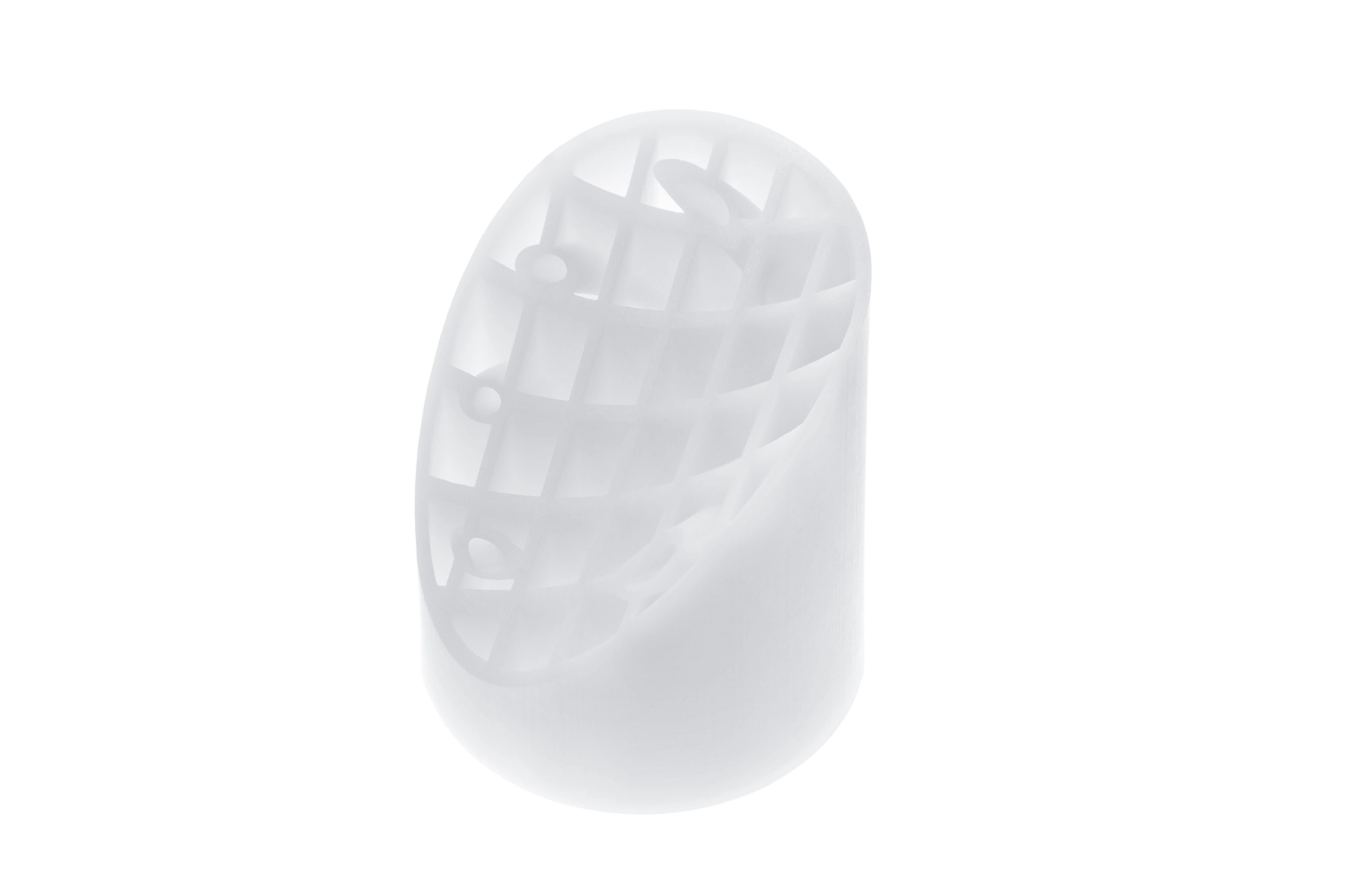
Efficient heat transfer under extreme conditions
This compact ceramic heat exchanger is designed for operating temperatures up to 1400 °C. Its internal channel system with diameters of around 2 mm enables controlled fluid flow and efficient heat transfer within a very small installation space. Ceramic additive manufacturing allows the realization of complex internal geometries that cannot be achieved using conventional processes. The component is impermeable to liquids and gases and offers stable thermal and electrical properties, making it suitable for demanding cooling and heating applications.
Parameter
- Application: Chemical processing with integrated thermal exchange
- Material: Alumina 99.8%
- Weight: 2 to 14 g
- Dimensions: Diameter 10 mm, height 20 mm (example variant)
- Technology: VPP (LCM)
- Features: Complex internal channel system; Suitable for service temperatures up to 1400 °C
- Advantages: Functional integration within a compact design; Thermal conductivity up to 25 W/mK; Specific electrical resistance up to 10¹⁴ Ω·cm
Medical Gripper
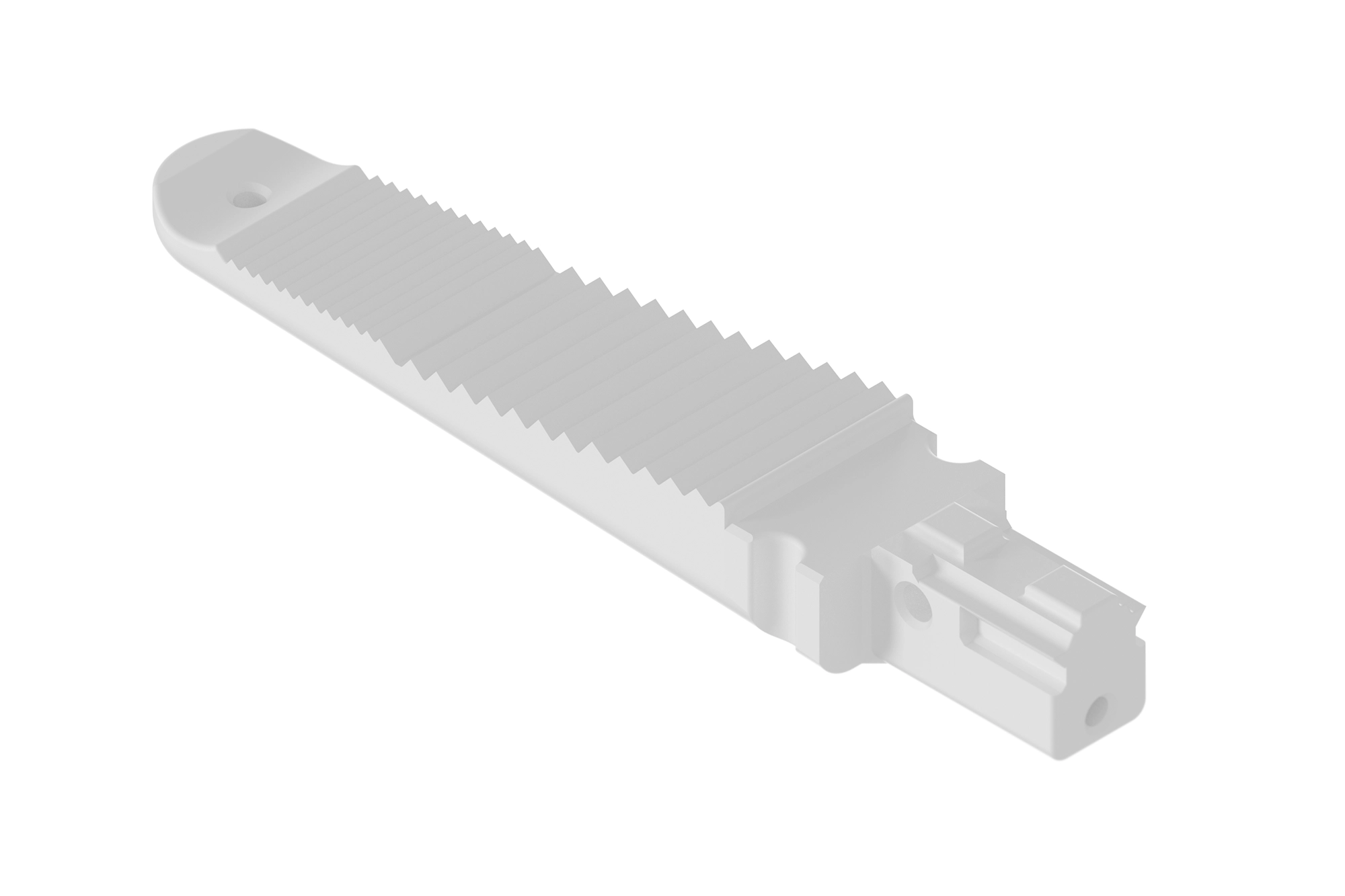
High-strength component for demanding applications
This ceramic gripper is designed for applications that require precision, cleanliness and high mechanical load capacity, such as medical or surgical environments. Two curved groove areas enable controlled gripping functions. An internal channel allows the integration of additional functions such as fluid transport for air or water, or the routing of electrical connections. Manufactured from zirconia, the component combines high density, excellent fracture toughness, and wear resistance with integrated functionality.
Parameter
- Application: Medical instrument for surgical procedures
- Material: Zirconia (ZrO₂, 3 mol.% yttria stabilised)
- Weight: 0.57 g
- Dimensions: 19.5 × 4 × 2.5 mm
- Technology: VPP (SLA & LCM)
- Features: Internal channel; Two curved functional groove areas; Design optimized for easy installation
- Advantages: High density and no open porosity; High strength and fracture toughness; Functional integration in a single component
Gas injector
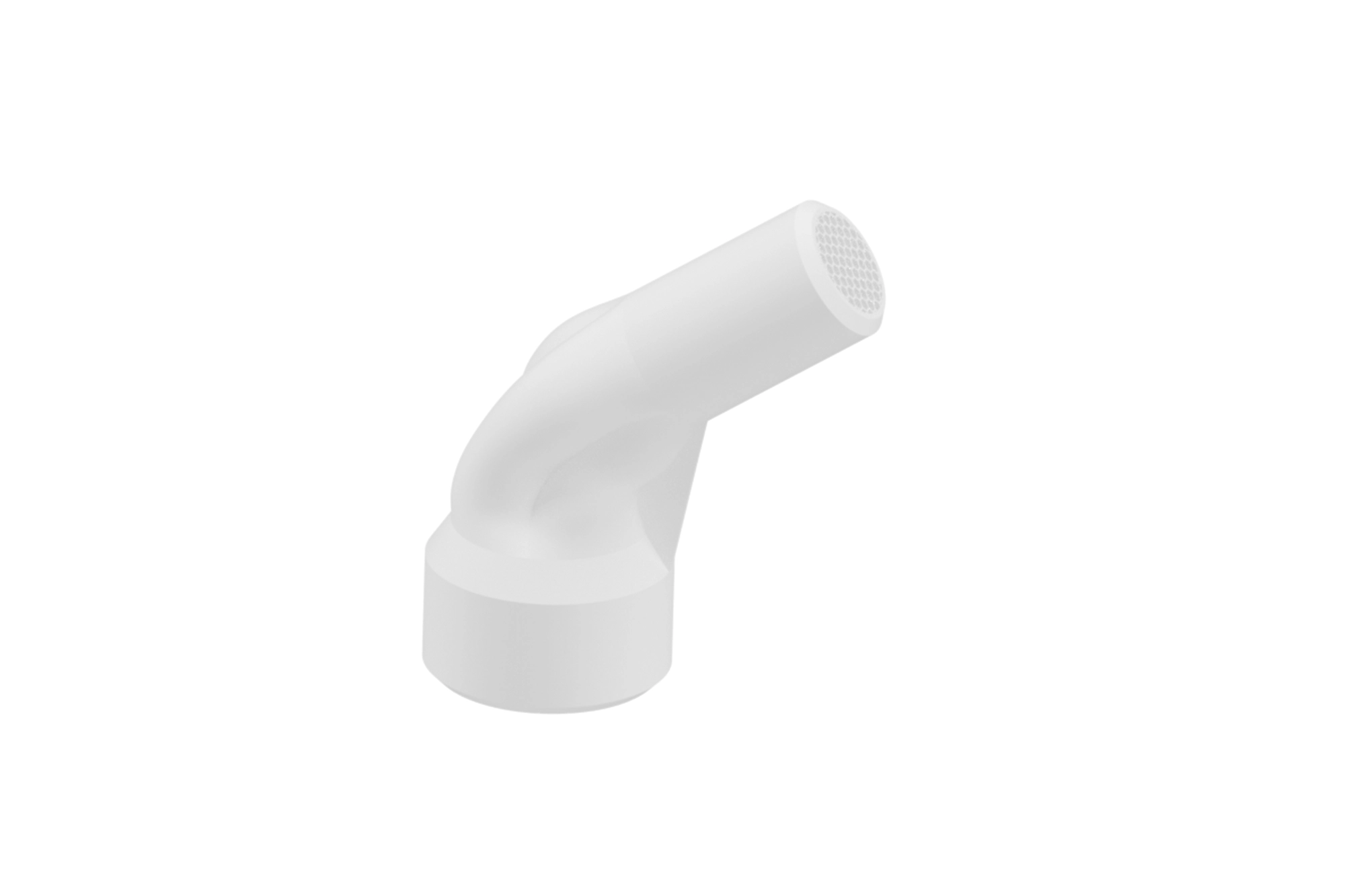
From multi-part assembly to integrated design
This gas injector demonstrates the level of functional integration that can be achieved using ceramic additive manufacturing. A component that was previously produced as a two-part assembly is now realized as a single, fully integrated part. Manufactured from high-purity alumina using LCM, the component integrates three 6 mm channels, a flow-optimized internal honeycomb structure and 62 openings with a wall thickness of 0.2 mm. This design is ideally suited for etching processes in semiconductor manufacturing.
Parameter
- Application: Gas injector for etching processes in semiconductor manufacturing
- Material: Alumina 99.8%
- Weight: 20 g
- Dimensions: Diameter 20 mm (flange), diameter 9 mm (outlet), height 42 mm
- Technology: VPP (LCM)
- Features: Three integrated channels; 62 micro openings; Honeycomb flow structure
- Advantages: High level of functional integration; Optimized flow distribution; Chemical and thermal resistance; Simplified assembly and maintenance; Particle-free operation
Threaded Connector
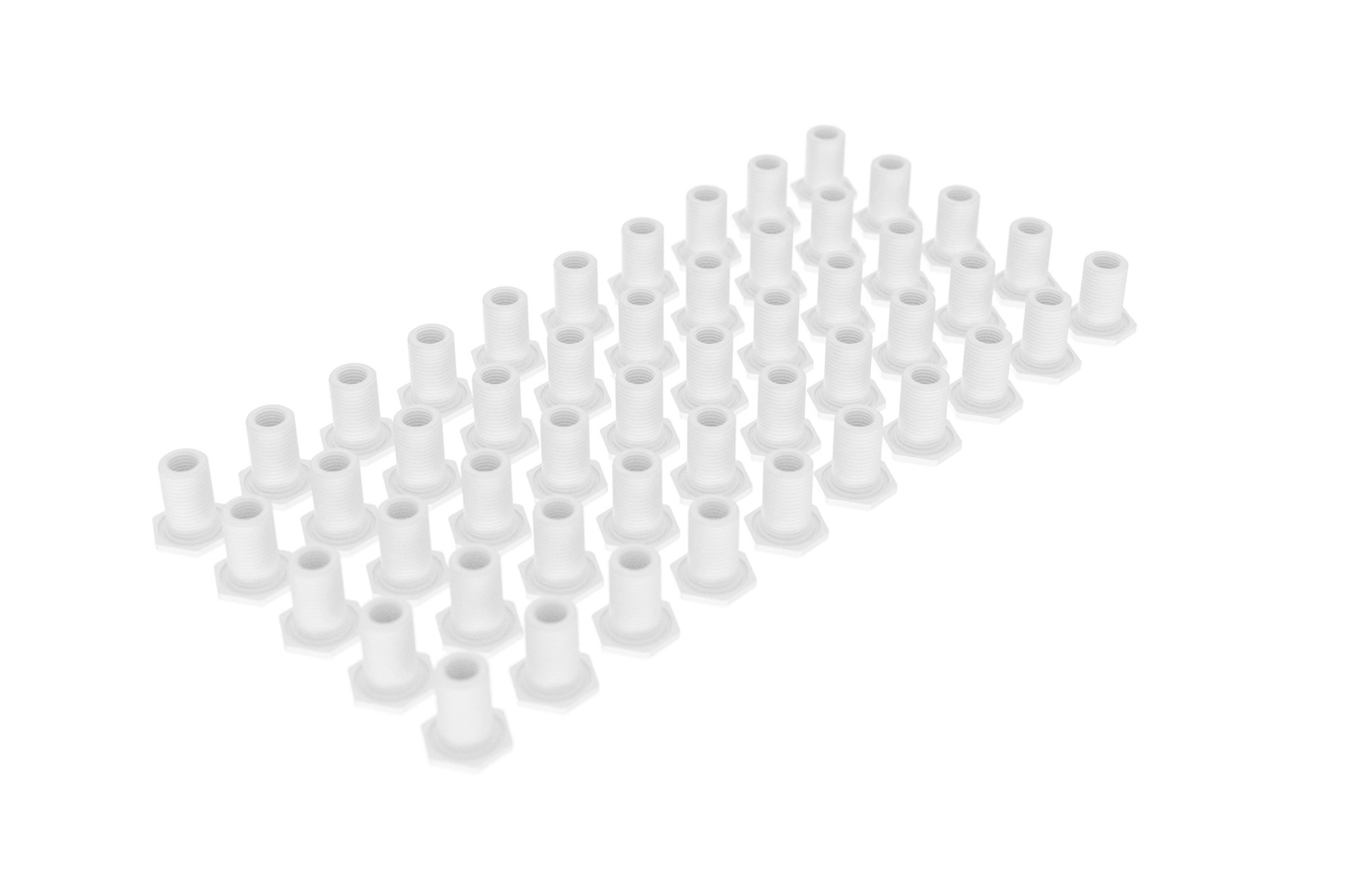
Precision threads in technical ceramics
This ceramic component is designed as an insulating connector for demanding environments such as aerospace applications. The realization of internal and external threads in technical ceramics requires highly stable additive manufacturing and sintering processes to achieve tight tolerances and reproducible performance. With extensive experience in ceramic additive manufacturing, complex threaded geometries can be produced not only as prototypes but consistently in series production.
Parameter
- Application: Insulating ceramic connector for technical systems
- Material: Zirconia
- Dimensions: Length 15 mm, wrench size 15 mm, height 17 mm; Outer thread: G 1/8, outside diameter 9.5 mm; Inner thread: UNEF 1/4, bore diameter 5.7 mm; Technology: VPP (LCM)
- Weight: 4,8 gr
- Technology: LCM
- Features: Internal and external threads; Compatible with UNEF and British Standard Whitworth
- Advantages: Tight tolerances; Reproducible series production; Reliable performance in demanding environments