3D-Printed Component reduces Downtimes in Production

In highly automated high-speed production environments, mechanical precision and maximum equipment uptime are critical to success. Bosch Advanced Ceramics (now Sinto Advanced Ceramics) provided production-engineering consulting and additive series manufacturing for an innovative technical ceramic dispensing needle developed by STIWA Automation GmbH. This complex component for automated adhesive bonding processes cannot be fabricated using conventional manufacturing methods. Leveraging ceramic 3D printing, the part features a complex internal geometry and a flow-optimized surface. This combination minimizes unplanned downtime and significantly increases Overall Equipment Effectiveness (OEE).
Complex Internal Geometries Fabricated Reliably in Series Production
STIWA previously relied on metal dispensing needles to apply high-viscosity adhesives. However, due to the highly abrasive nature of the dispensing media, these components suffered from limited tool life. Since every tool change triggers production line downtime and substantial manufacturing costs, maximizing component wear-life is a critical economic factor. The wear-resistant technical ceramic alternative is produced via a layer-by-layer additive manufacturing process.
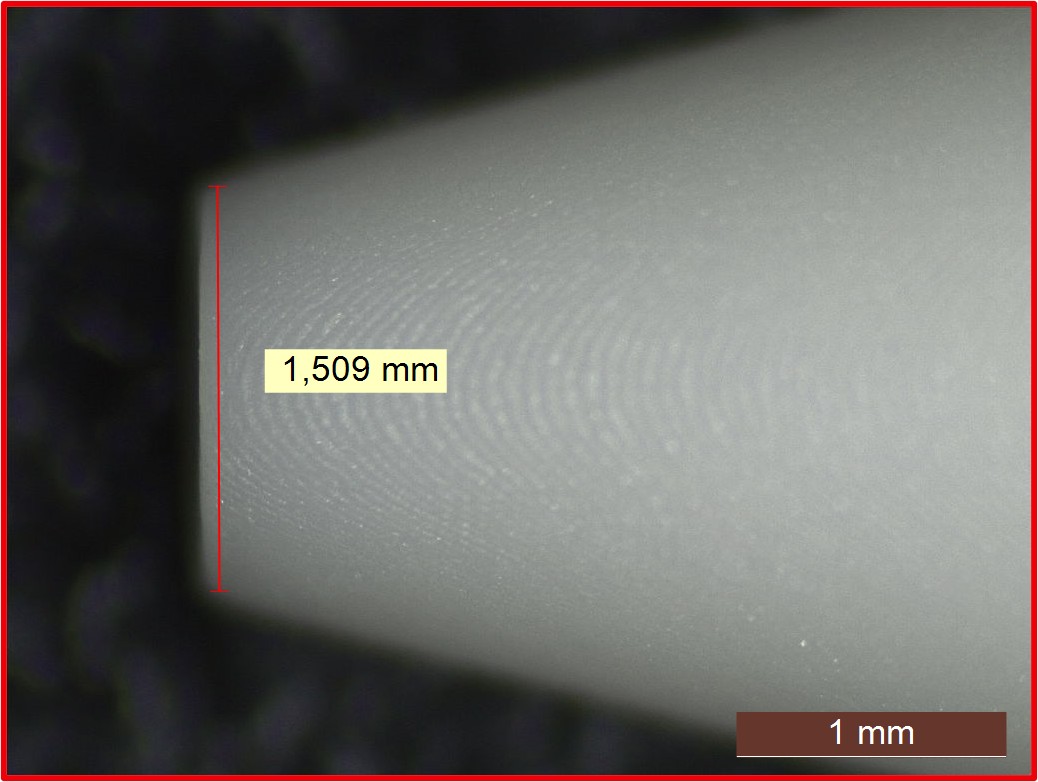
The engineering breakthrough of this dispensing needle lies in its complex internal contour: an internal cone tapers along a sophisticated curvature from a few millimeters down to an exit diameter of 0.8 mm. This freeform surface cannot be reliably produced using subtractive (machining) or traditional formative methods. The generative approach is the only technology capable of replicating this geometric freedom with absolute contour accuracy. Thanks to the high precision of the additive process, the nozzle outlet achieves its required roundness right out of the printer—completely eliminating the need for mechanical post-processing.

Flow-Optimized Functional Surfaces with Bosch Quality Standards
To ensure reproducible, continuous material dispensing without pressure drops, the adhesive must flow through the nozzle with minimal fluid resistance. Because the intricate internal geometry rules out any subsequent surface finishing (such as honing or abrasive flow machining), the required surface quality must be achieved directly during the primary shaping step (as-printed). The additive manufacturing process reliably meets these tight geometric tolerances and surface finish requirements.
With its heritage as a former Bosch company, Sinto Advanced Ceramics has retained the group's strict quality mindset and standards for industrial contract manufacturing. Expert upfront consulting ensures that customer designs are perfectly tailored to the unique requirements of ceramic materials. The subsequent standardized additive manufacturing process enables the cost-effective, high-volume reproduction of these highly complex components, scaling up for global series production.
"Ceramic 3D printing from Bosch Advanced Ceramics was the only technology that allowed us to realize this unique geometry while meeting the stringent tolerance and surface finish requirements for the dispensing needle. For us, Bosch Advanced Ceramics offers the technologically superior and most cost-effective solution."– STIWA Automation GmbH