Ceramic Additive Manufacturing: Potentials in Medical Device Instrument Design
In medical technology, continuous material and process innovations form the technological foundation for enhancing product performance and geometric precision in surgical systems. A key technology in the segment of complex system components is the additive manufacturing of advanced technical ceramics (Ceramic AM). Whether implemented for incremental design optimizations or fundamental construction changes, this process significantly expands the functional spectrum of components. Concurrently, it reduces time-to-market within an industry characterized by lengthy approval processes and strict regulatory frameworks. Because modern surgical instruments must meet demanding requirements regarding precision, weight reduction, and sterilizability, ceramic additive manufacturing offers the capability to reliably integrate complex geometries without generating additional assembly costs or system complexity.
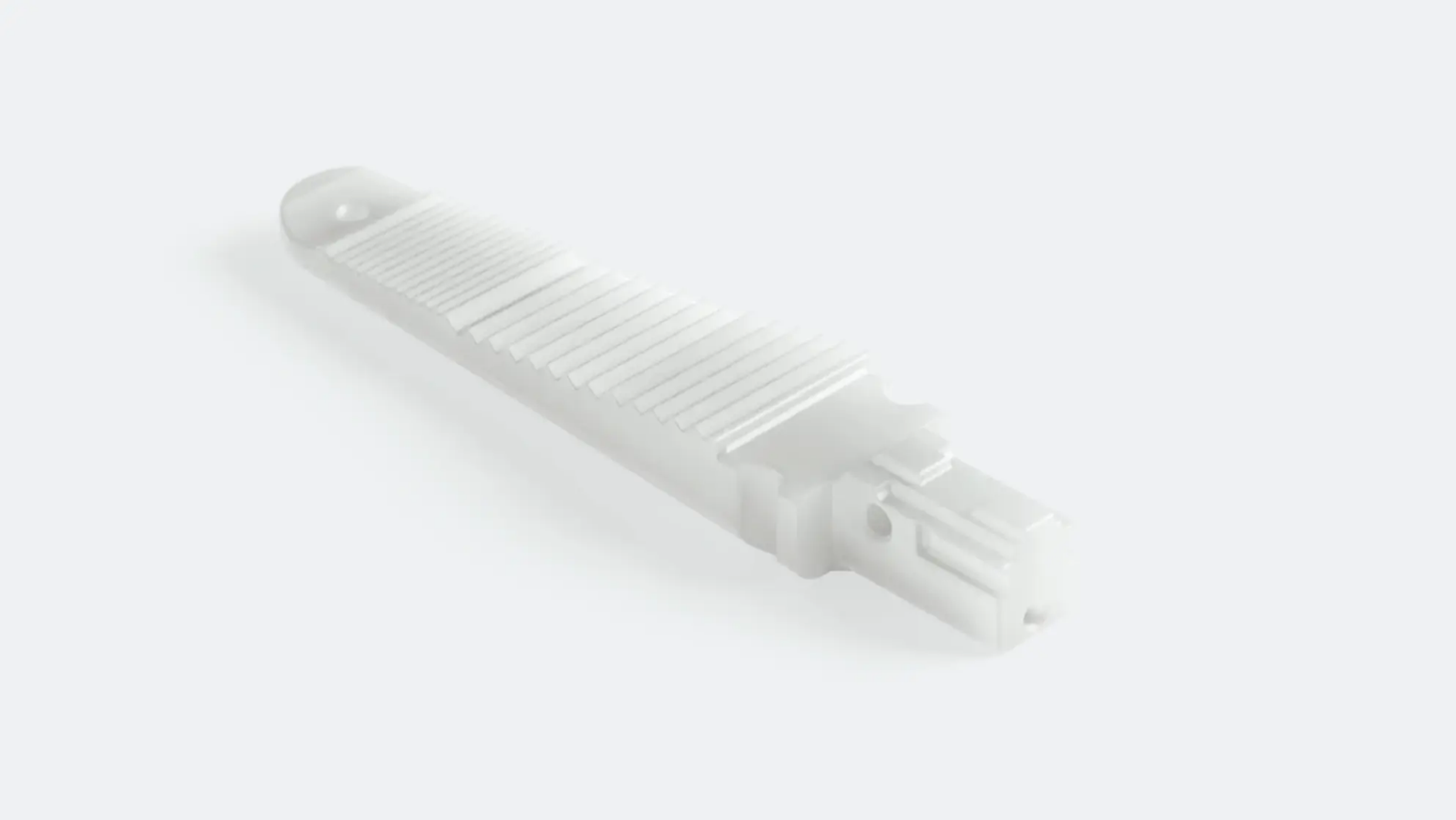
Sinto Advanced Ceramics operates as an experienced contract manufacturer in this segment. Based on the industrial production of high volumes of additively manufactured ceramic components, the company masters the highly demanding thermal processes involved. A distinct application example is 3D-printed surgical grippers (Ceramic Grippers). Despite their small dimensions, these grippers serve as functional key components in laparoscopic instruments. They require a specific property profile that combines biocompatibility, high hardness, chemical resistance, and electrical insulation. Compared to metals and plastics, advanced technical ceramics offer material advantages that permanently guarantee the required precision and mechanical reliability, even in micro-invasive procedures.
Functional Integration Exemplified by Ceramic Grippers
Using the surgical grippers from Sinto Advanced Ceramics as a case study, the structural value added by additive manufacturing can be analytically demonstrated. The primary advantage over conventional manufacturing methods lies in the realization of integrated internal fluid channels. These channels enable the targeted delivery of fluids such as air or irrigation liquids, while simultaneously serving as a protected cavity for electrical wiring to provide sensor or actuator functions directly at the tip of the gripper. While traditional subtractive manufacturing methods reach technological limitations with such complex internal geometries or incur prohibitive tooling costs, this design can be produced toollessly via 3D printing.
Sinto Advanced Ceramics manufactures these grippers from yttria-stabilized zirconia (3Y-TZP). With dimensions of 19.5 x 4 x 2.5 mm, the components feature a net weight of just 0.57 grams. The material is characterized by high microstructural density, exceptional bending strength, and pronounced resistance to chemical degradation. Consequently, the components are engineered to withstand the mechanical stresses of the surgical environment as well as repeated sterilization cycles.
Furthermore, the grippers feature design attributes for simplified system integration alongside two geometrically defined groove areas for universal use in diverse surgical scenarios. With a material density exceeding 6.1 g/cm³, the zirconia delivers the necessary fracture toughness to minimize the risk of component failure during clinical deployment. In addition to inherent biocompatibility, the material exhibits a thermal conductivity of 2 W/mK at 100 °C. This supports controlled thermal dissipation to protect sensitive electronic assemblies within the instrument.
.png)
Management of Thermal Processes and Quality Assurance
In the field of medical device manufacturing, comprehensive material and process validation is mandatory. While advanced ceramics offer superior mechanical properties, they require highly controlled thermal processing. The inherent hardness of the material demands exact parameters, particularly during the critical process steps of debinding and sintering. Sinto Advanced Ceramics controls these thermal processes through a stringent quality management system to guarantee tight tolerances and maximum dimensional accuracy. For quality assurance within the regulated medical technology environment, the company utilizes non-destructive testing methods such as computed tomography (CT) scans, alongside standardized mechanical and functional validation tests.
Design Freedom and Cost-Effective Series Production
Ceramic additive manufacturing has established itself as a stable production-scale process. Designers gain the freedom to develop complex geometries, undercuts, blind holes, or internal channels that are economically unfeasible using traditional machining methods. In conventional manufacturing, such complexities typically require multi-stage post-processing or additional joining operations, which increases manufacturing costs and the risk of defects.
Because 3D printing requires no injection molds, initial tooling costs are entirely eliminated. Design iterations can be modified purely digitally and implemented directly in the build job. This agility shortens development cycles and allows for rapid responses to clinical feedback. Because each component can be individually modified, the cost-effective production of low-volume series is just as viable as highly scaled mass production. The process thus offers high flexibility regarding production volume and variant diversity.
Technology Transfer and Development Support
Sinto Advanced Ceramics possesses long-standing expertise in ceramic processing. Since 2016, the company has successfully transferred its material knowledge from ceramic injection molding (CIM) to additive manufacturing processes. The service portfolio encompasses comprehensive engineering consultation—ranging from application-specific material selection and design for additive manufacturing (Design for AM) to options for functional integration. Through the utilization of validated 3D printing technologies, defined material properties, surface qualities, and mechanical characteristics are reproducibly achieved in series production.
Ashu Sharma, CSO Bosch Advanced Ceramics (now Sinto Advanced Ceramics), comments:
"Innovation cycles in medical technology are continuously accelerating, with ceramic additive manufacturing representing a key technology. The process has moved beyond prototyping and offers a mature solution for series production. By combining the specific material properties of advanced ceramics with the geometric freedom of 3D printing, new options open up for the construction of sophisticated medical products. We structurally support our customers in exploiting these manufacturing potentials and technologically securing their market position."